

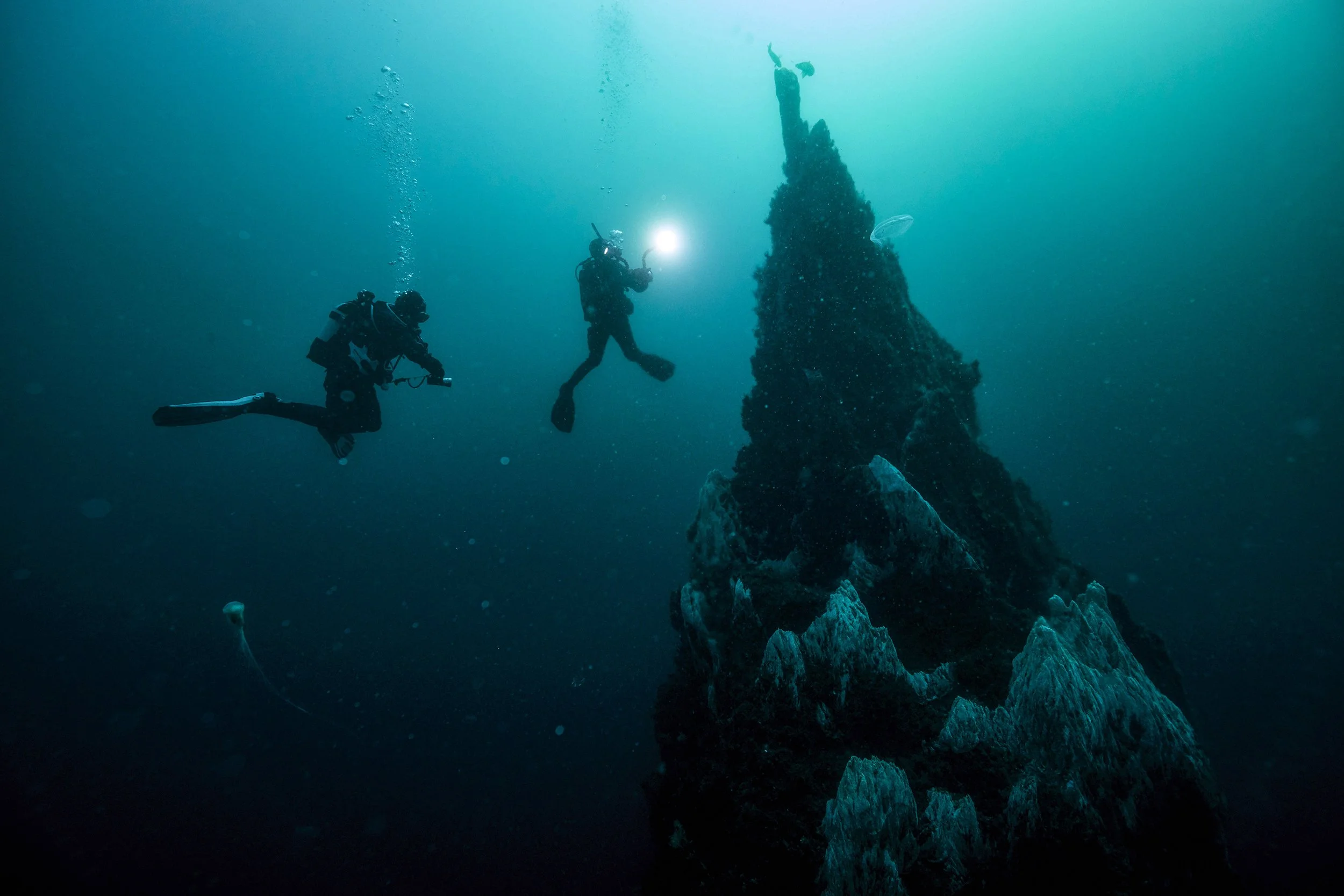
DEEP DIVER COURSE IN FRANKFURT
Your PADI Deep Diver Course — Deep Diving to 40 Meters
Price: €259 — includes e-learning, a tank, refills, and certification
Duration: Four dives, usually over two days
Prerequisites: PADI Advanced Open Water Diver or Adventure Diver with a Deep Dive Adventure Dive, medical clearance certificate (TTU)
Minimum age: 15 years
Certification: PADI Deep Diver — up to 40 meters, valid worldwide for life
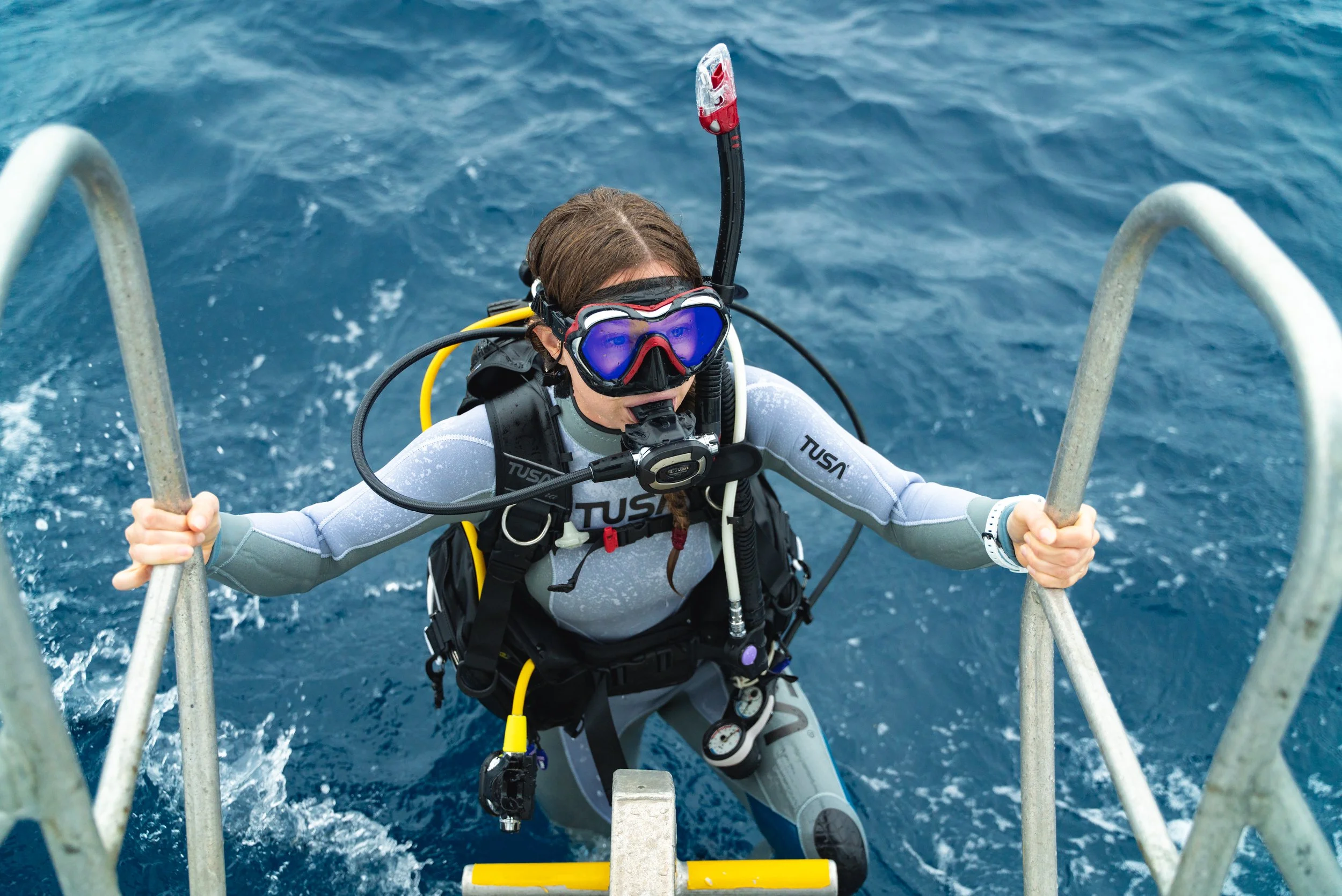

40 meters is the limit for recreational diving. The PADI Deep Diver course takes you right up to that limit—and at the same time teaches you why you should take it seriously.
Between 30 and 40 meters, the dive changes noticeably. Your air supply lasts less than half as long as it does at the surface, the no-decompression limit shrinks to just a few minutes, and colors fade. And for most people, this is the first time they notice nitrogen narcosis: slower thinking, tunnel vision, and a strange sense of calm.
That's exactly what this course is all about: experiencing how you yourself react to depth over the course of four dives—under supervision, with a plan, and with a safety margin.
What to expect
PADI e-Learning in Advance
Gas consumption and pressure effects, no-decompression limits and decompression requirements, nitrogen narcosis, oxygen limits, and emergency planning. Plan on three to four hours, which you can divide up as you like. Access is included in the price and is yours to keep forever.
Four dives, each building on the previous one
Don't go down to 40 meters on your first day—take reasonable steps instead. Dive planning with a margin of safety: depth, time, decompression pressure, and ascent profile. The narcosis test: a simple exercise at depth, compared to your time at the surface—for most, the most memorable exercise of the course. Color loss and air consumption in practice. Emergency gas supply via the ascent line and a controlled ascent with a safety stop.
Certification
After your fourth dive, you'll be a PADI Deep Diver and certified to dive to depths of up to 40 meters anywhere in the world. You'll receive your digital card right away.
What's Included in the Price
Includes:
PADI e-Learning “Deep Diver” — Lifetime Access
Four course dives with a PADI instructor in small groups
Diving tank and all refills
Port Fees
Emergency equipment for the drills
Digital Brevet Card
Certification Fees
Not included:
Your diving gear. You’ll need to bring your own jacket, regulator, and wetsuit—or you can book the rental equipment package for 80 €.
ABC gear: mask, snorkel, fins, footies.
Requirements
PADI Advanced Open Water Diver — or PADI Adventure Diver with the “Deep Dive” adventure dive. We accept certifications from other organizations, such as CMAS or SSI, provided that PADI recognizes them as equivalent.
Minimum age: 15 years.
PADI Diving Medical Questionnaire Before the course begins — standard for every diving course.
A medical certificate of fitness to dive if we’re diving at Hunsfels. The lake requires one from every diver, without exception; at Kronau, it’s not necessary. Any doctor can issue it, including your family doctor—you don’t need a diving physician. To be on the safe side, get it in advance, so you’ll be prepared for both lakes.
To be honest, there’s one more thing that isn’t covered in any standard manual: solid buoyancy control and composure in the water. Anyone who’s still struggling with buoyancy at 18 meters should practice perfect your buoyancy control beforehand.
Learn Deep Diving in Frankfurt and the Rhine-Main Region
Theory, equipment, and preparation take place at our location in Frankfurt-Schwanheim, Vogesenstraße 12C. Customer parking is available behind the building (entrance at Am Kirchholz 12); you can reach us via the A5 and Schwanheimer Bahnstraße. It takes 15 to 20 minutes from Sachsenhausen, Niederrad, and Höchst, and a good half hour from Offenbach, Rüsselsheim, Hanau, and Bad Homburg.
For deep-water diving, we need bodies of water that are deep enough—not every quarry pond reaches 40 meters. We specifically head to lakes that meet this requirement, all within just under an hour’s drive. At a depth of 35 meters in a German lake, it’s dark and cold—more challenging than the Red Sea, and that’s exactly why it’s a good place to learn.
Why the Frankfurt Dive Center
Small groups—this is especially relevant here. At a depth of 40 meters, a dive instructor can't keep an eye on six people at once.
Equipment service and our own filling station. Vending machines that consistently dispense at the correct depth aren't a matter of chance—it's all about maintenance.
We don't push the limits. 40 meters is the limit, not the goal. If someone isn't ready on a given day, we'll dive shallower and make up the dive later.
What comes after the Deep Diver?
The Deep Diver course is best combined with the NITROX COURSE — both focus on gas, time, and depth limits. It counts as one of the five specialties on the path to becoming a Master Scuba Diver.
If you want to go deeper than 40 meters, the next step is technical diving—a separate training path with its own standards. Find out all about it on the page TECHNICAL DIVING COURSES.
You can find all specialties under SPECIALTIES, and all prices in the PRICE LIST.
FAQ
-
Up to 40 meters—the limit for recreational diving. As an Advanced Open Water Diver, your limit is 30 meters without the Deep Diver certification.
-
259 euros. This includes e-learning, four dives, a tank, tank fills, lake fees, and certification. The equipment rental package costs an additional 80 euros.
-
Three to four hours of e-learning beforehand, followed by four dives—usually spread over two days.
-
PADI does not specify a minimum number of dives, but requires the Advanced Open Water Diver certification or the Adventure Diver certification with a Deep Dive adventure dive. In practice, your buoyancy and air consumption should be consistent.
-
It is manageable if you are aware of it and have planned the dive. It disappears completely during the ascent. It only becomes a problem if you don't notice it—which is why the narcosis test is part of the course.
-
Yes, we dive in lakes in the Rhine-Main region that are deep enough. In the winter, we recommend taking a drysuit diving course beforehand.
-
No. The higher the oxygen content, the shallower the maximum permissible depth. For depths around 40 meters, air remains the standard choice in recreational diving.
-
About technical diving—which involves different gas mixes, different equipment, and its own training program. Let us know if you're interested.