

ADVANCED OPEN WATER DIVER IN FRANKFURT
Your PADI Advanced Open Water Diver (AOWD) Course
Price: €449 — includes e-learning, a tank, refills, and certification
Duration: Five Adventure Dives, usually over a weekend
Prerequisites: PADI Open Water Diver certification or equivalent, medical clearance certificate (TTU)
Minimum age: 15 years (ages 12 and up: Junior Advanced Open Water Diver)
Certification: PADI Advanced Open Water Diver — up to 30 meters, valid worldwide for life
The Advanced Open Water Diver is not a second beginner’s course. It’s the course where you stop worrying about your gear and start actually diving. Five dives, each with its own focus, each under the guidance of a PADI instructor—and at the end, you’ll be able to dive down to 30 meters.
Two of the five dives are mandatory: deep diving and underwater navigation. These are the two skills where newly certified divers most often struggle. Depth affects your dive time, your air consumption, and, let’s be honest, your mental state. Navigation determines whether you surface at the entry point at the end of a dive or 200 meters away. You choose the remaining three dives yourself—from areas such as buoyancy control, night diving, dry suit diving, wreck diving, nitrox, or underwater photography.
You don't need a specific number of logged dives for this. You can take the AOWD right after the Open Water Diver — and for many, that’s exactly the best time to do it, because the skills are still fresh and any uncertainty hasn’t yet become a habit.
What to expect
PADI e-Learning in Advance
Each Adventure Dive you choose includes a theory component that you’ll complete online. Expect to spend a total of three to five hours on it, depending on your selection. Access is included in the price and is yours to keep permanently—it’s not just a temporary access pass for the duration of the course.
Dive 1: Deep Dive
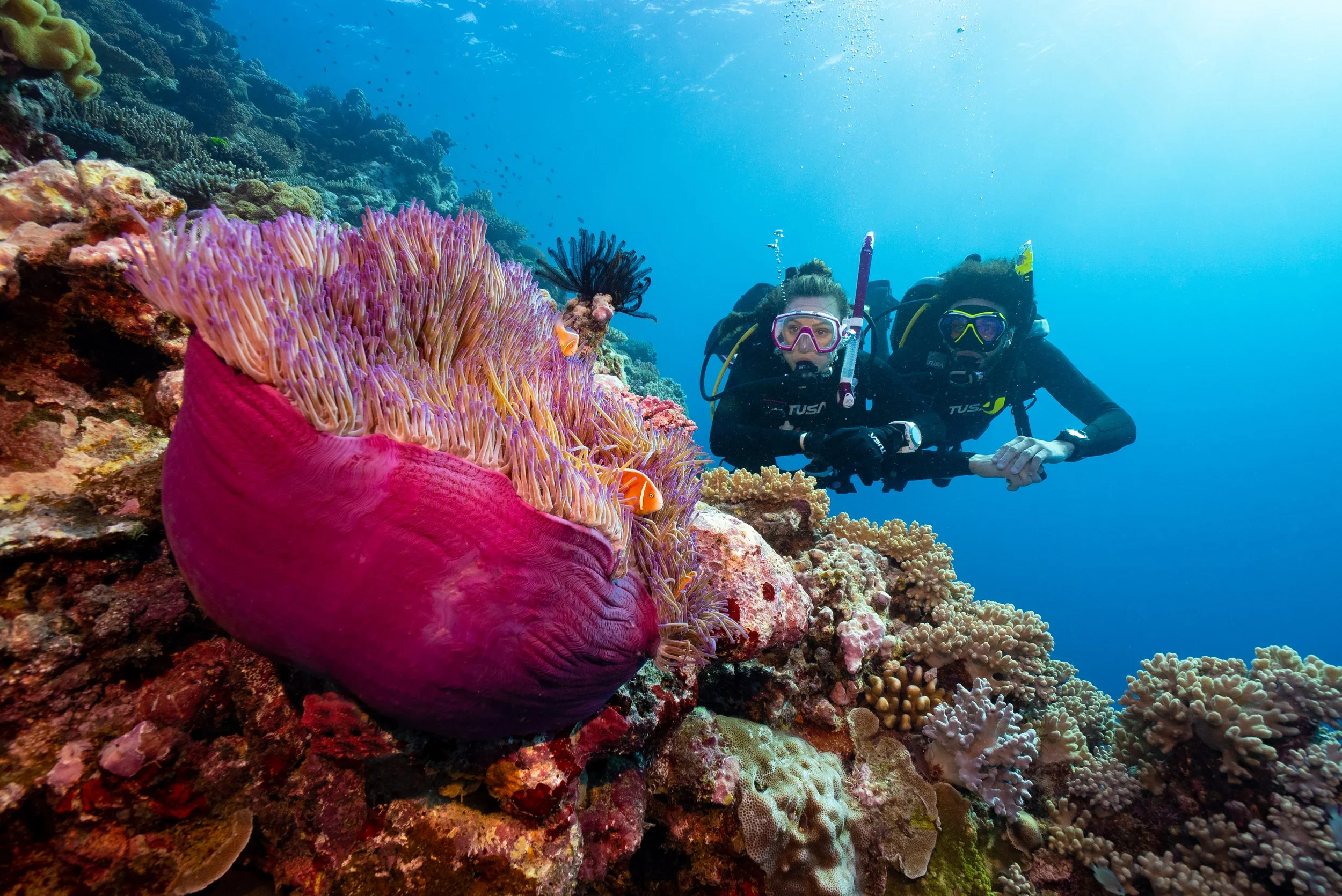
We’ll go deep, and you’ll experience what actually changes as we descend: colors fade, air consumption increases noticeably, and no-decompression time shrinks rapidly. You’ll take a simple reaction test at depth and compare the results with those from the surface. This isn’t a show—it shows you what nitrogen narcosis feels like for you personally before you encounter it unprepared.
Dive 2: Underwater Navigation
Compass, natural navigation, estimating distance based on fin strokes or time. You’ll dive in courses and rectangles, find your way back to the starting point, and learn to orient yourself using what the lake provides: the slope of the bottom, light penetration, and underwater features. In German lakes with varying visibility, this is an extremely useful skill.
Dives 3 through 5:
Here, we decide together. The most popular choices here are:
Perfect Buoyancy Control — the dive that makes the biggest difference in the long run. Less lead, less air consumption, no disturbed seabed.
Night diving — familiar lakes look completely different in the dark.
Dry suit diving —the key to getting in the water even from November through April.
Wreck diving, photography, naturalist diving, or search and recovery —depending on where you want to go.
Each Adventure Dive also serves as the first dive of the corresponding specialty course. If you go on to complete the full specialty course later, this dive will count toward it.
Certification
After your fifth dive, you'll be a PADI Advanced Open Water Diver. You'll receive your digital card right away.
What's Included in the Price
Includes:
PADI eLearning for all selected Adventure Dives — lifetime access
Five Adventure Dives with a PADI instructor in a small group
Diving tank and all refills
Lake or Pool Fees
Logbook Entries and Course Materials
Digital Brevet Card
Certification Fees
Not included:
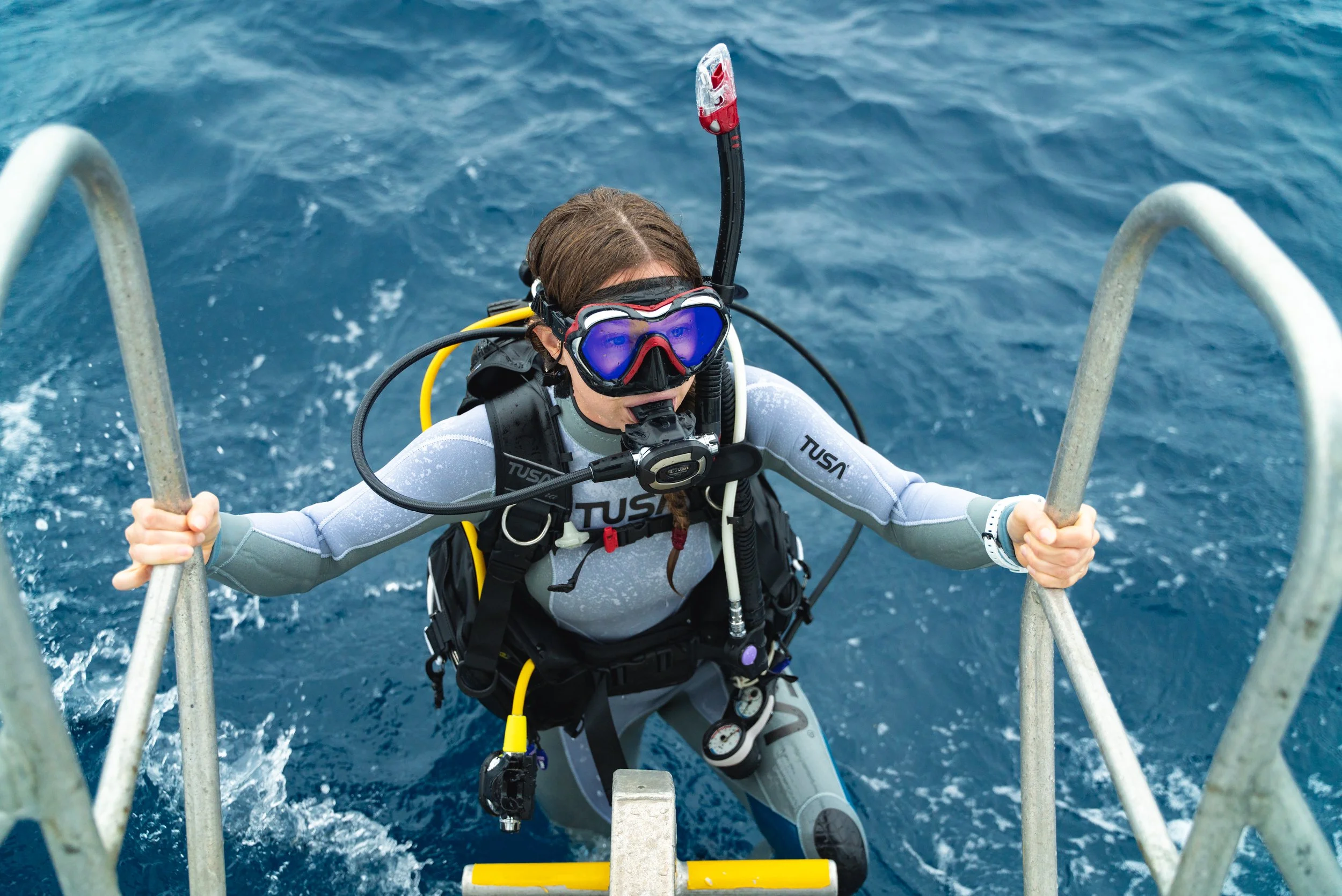
Your diving gear. For the Advanced Open Water Diver course, only the tank and fills are included in the price. You'll need to bring your own BCD, regulator, dive computer, and wetsuit.
ABC gear: mask, snorkel, fins, footies.
Requirements
PADI Open Water Diver or a recognized equivalent certification from another organization. Old S.U.B., CMAS, or SSI certifications also count—just bring them with you.
Minimum age: 15 years. For ages 12 to 14, there is the Junior Advanced Open Water Diver course with a reduced depth limit.
There is no minimum number of dives. You can continue right after completing your OWD.
PADI Diving Medical Questionnaire Before the course begins — standard for every diving course.
Medical certificate of fitness for diving — practically always required for the Advanced course. We’ll do the deep dive at Hunsfels because we actually have 30 meters of depth available there, and the lake requires every diver to have a certificate. Any doctor can issue it, including your family doctor. It’s best to take care of this right after you book.
If it's been more than a year since your last dive, we recommend taking a ReActivate course beforehand. This isn't a requirement, but it ensures that your first deep dive isn't also your first dive back into the water.
Advanced Open Water Diver in Frankfurt and the Rhine-Main region
Our dive center is located at Vogesenstraße 12C in Frankfurt-Schwanheim. You can get there in just a few minutes via the A5 and Schwanheimer Bahnstraße; parking is available right at the building. It takes 15 to 20 minutes from Sachsenhausen, Niederrad, and Höchst, and a little over half an hour from Offenbach, Rüsselsheim, Hanau, and Bad Homburg.
The theory session and equipment distribution take place here in Frankfurt. We dive in the lakes of the Rhine-Main region—we’ll decide which one based on visibility, water temperature, and the depth required for your deep dive. All of them are within just under an hour’s drive.
And yes: Diving to a depth of 30 meters in German lakes is different from diving in the Red Sea. It’s cooler, darker, and visibility is often poorer. That’s exactly why it’s such a good training ground. If you can navigate and adjust your buoyancy properly here, you won’t have any problems in warmer waters.
Why the Frankfurt Dive Center
Small groups. Five dives with an instructor who has time for you are worth more than five dives in a crowd. This is especially true when it comes to depth and navigation.
Equipment service and our own filling station. We fill your tanks ourselves. Our rental equipment is owned by us and is regularly maintained—we handle part of the maintenance ourselves, and for other brands, we work with authorized service centers.
It continues from there. Via the FDC Club , you’ll get in the water regularly. A certification you don’t use isn’t worth much.
What comes after the Advanced Open Water Diver course?
The logical next step is the Rescue Diver course for €449—the course that, in hindsight, most divers say has had the greatest impact on their diving. For this, you'll also need a valid first aid and CPR certification, which you can earn through our EMERGENCY FIRST RESPONSE course for €149.
If you'd rather specialize in depth or in a specific area: DEEP DIVER (up to 40 meters), PERFECT BULKHEAD, OR NITROX.
Those who complete the course will earn the MASTER SCUBA DIVER certification—the highest non-professional recognition in recreational diving.
You can find all prices on our PRICE LIST.
Ready for the next step?
We’ll give you personalized advice—the best next course for you depends on your experience and goals. Give us a call or send us a message.
FAQ
-
449 euros. This includes PADI eLearning, five Adventure Dives with an instructor, a tank, refills, lake and pool fees, and certification. We do not charge separately for eLearning and certification fees. If you need your own equipment, the equipment rental package costs an additional 60 euros.
-
No — the AOWD price includes only the bottle and the refills.
-
Typically, a long weekend for the five dives, plus three to five hours of e-learning beforehand.
-
None. The PADI Advanced Open Water Diver course requires only the Open Water Diver certification; there is no minimum number of logged dives. You can start right away.
-
Up to 30 meters. For 40 meters, the Deep Diver is the next step.
-
Deep Diving and Underwater Navigation. We'll choose the remaining three together from the specialty course offerings
-
Yes. Each Adventure Dive is the first dive of its respective specialty. If you complete the full course later, it counts toward it.
-
Ages 15 and older qualify as full Advanced Open Water Divers; ages 12 through 14 qualify as Junior Advanced Open Water Divers with a reduced depth limit.
-
If it's been more than a year since your last dive, we recommend taking the ReActivate (Refresher) course beforehand. It's not required, but a deep dive isn't a good way to get back into diving.
-
The Adventure Diver course, priced at 349 euros, includes three Adventure Dives instead of five and has no mandatory dives. It counts toward the AOWD certification. For most people, however, it’s still worth going straight for the Advanced Open Water Diver certification—100 euros more for two additional dives and a higher-level certification.